
How CloakID Works

Updated August 2026: this post has been revised to describe CloakID’s current architecture. The original March 2025 version described an earlier cloud-proxy design we have since moved away from — you can read about what we learned from it in The Latency Trap.
How does CloakID work?
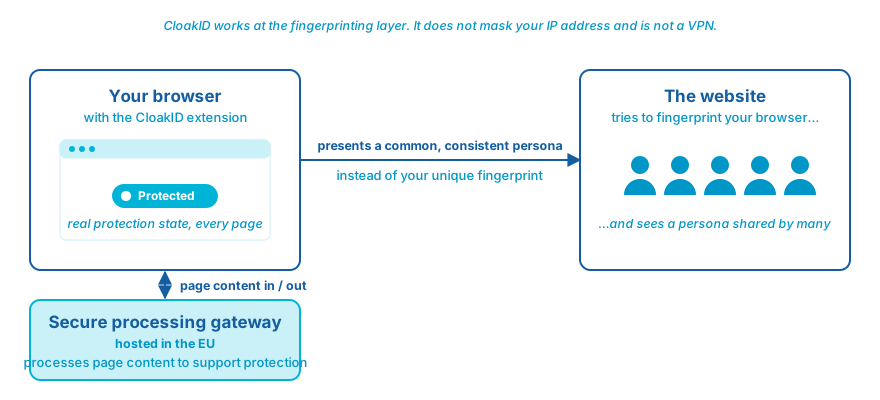
CloakID is two parts working together:
-
 A browser extension — this is where protection happens. On supported sites, the extension presents the website with a common, consistent persona derived from real-world data, instead of the unique fingerprint your browser would otherwise expose. Rather than standing out — or looking obviously randomized, which is itself a signal — you blend into a crowd.
 -
 A secure processing gateway in the EU — the gateway processes page content to support the extension’s protections, hosted in European Union data centers with data minimization as an engineering principle.
Three properties define the experience:
- Explicit, per-site protection. Protection applies on supported sites; on unsupported sites the extension tells you so instead of pretending — see balancing for usability for why “reveal only what a site legitimately needs” is the right frame.
- Visible protection state. The extension shows the real status of the page you are on — protected, partially protected, or not protected.
- Honest trade-offs. First visits to new sites can take a moment longer while content is processed. We say so, because that is how it actually works.
What CloakID does not do: it does not mask your IP address (it is not a VPN — pair it with the transport-layer tool of your choice), and it does not guarantee protection on unsupported sites.
For where the product is heading — described honestly, benefits first, with in-development and exploration labels — see our Public Roadmap.